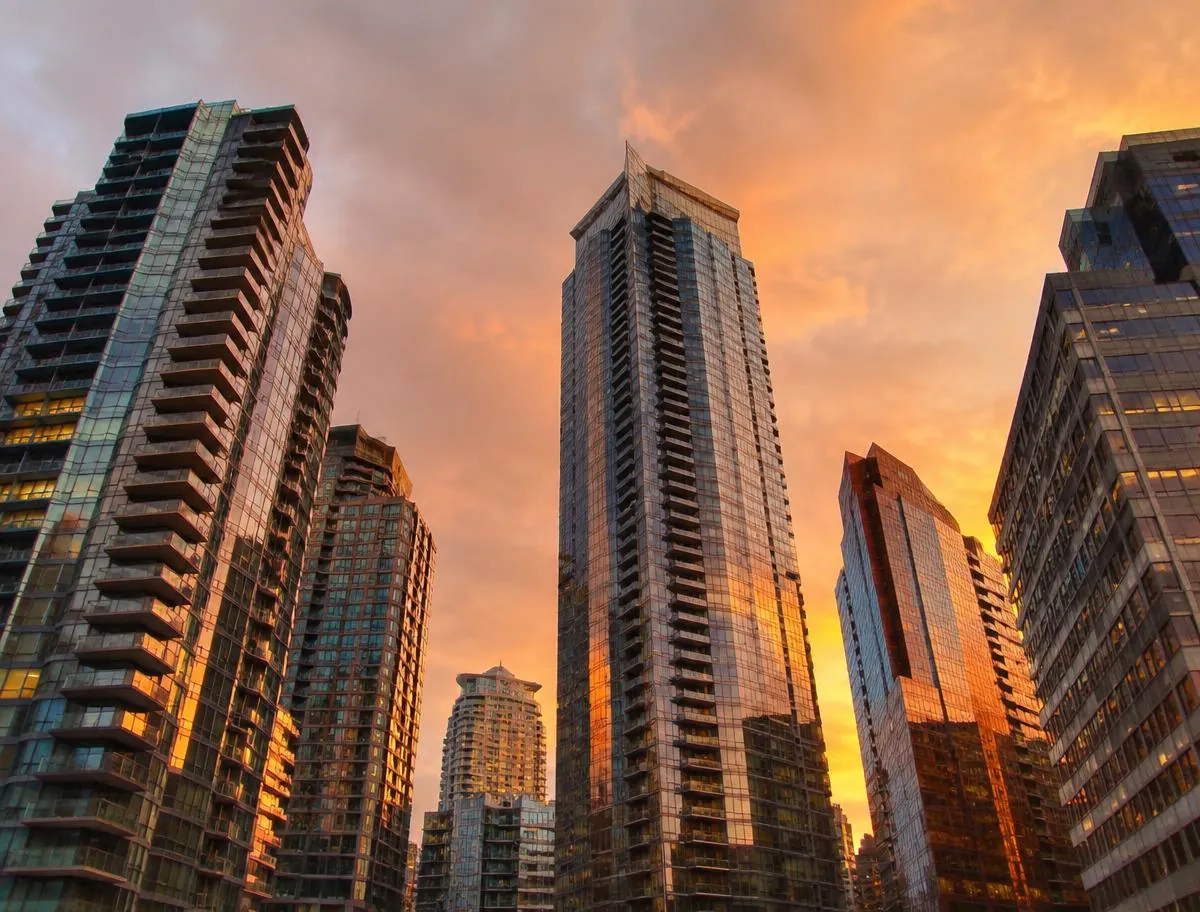
If you are thinking of buying a downtown condo and renting it by the night or the week, three sets of rules apply: the Province's, the City's and your strata's. A short-term rental is legal only when all three allow it. Below is how each one works in 2026, what still works for an owner who lives in the condo, and what to check before you write an offer. We read each provincial source on November 4, 2026.
BC's Short-Term Rental Accommodations Act defines a short-term rental as accommodation offered to the public in a host's property, for money, for a period of less than 90 consecutive days. The Province's page on the legislation says the Act covers booking platforms such as Airbnb, VRBO and Booking.com, and also offers on Facebook Marketplace, Kijiji, Craigslist and in newspaper classified ads. It does not apply to bookings of more than 90 days, or to hotels, motels and hostels.
A rental of a month or more to a tenant is a different kind of arrangement. The Province's page for strata landlords says short-term rentals are not covered by residential tenancy law, while long-term rentals usually fall under the Residential Tenancy Act. That difference decides which rules below apply to you.
In many communities, the Province limits short-term rentals to the host's principal residence, which its principal residence page describes as the usual place where the host makes their home day to day, plus one secondary suite or accessory home on the same property. The rule applies across BC in municipalities of 10,000 people or more and some smaller neighbouring places. Vancouver is on the list of communities where it applies, as of June 1, 2026.
A downtown condo is one home with no second suite. So under the provincial rule, you may list it only if you live there. Renting a room while you are home, or the whole condo while you travel, both count as using your principal residence.
Since May 1, 2025, every host must be registered with the provincial short-term rental registry and put the provincial registration number on each listing. Platforms must check that number against the registry. The Province's registration page says registration must be renewed each year. The yearly fees, set per unit:
- $100 for the host's principal residence, whether guests rent a room or the whole home while the host is away.
- $450 for a separate unit on the same property, such as a suite or laneway home.
If you fail to register, the Province says your listings will no longer be advertised, existing bookings will be cancelled and you will not be able to take new ones.
The Province lets local governments set rules stricter than its own. Its strata short-term rental page names Vancouver among the cities that generally limit short-term rentals to principal residences, meaning only the owner or the tenant who lives in the unit may list it. An investor who does not live there may not.
Where a local government requires a business licence, the Province says the host must show a valid licence number on the listing, and a platform must remove a listing that lacks one when the local government asks. The Province also raised the highest ticket fine a city may set under the Vancouver Charter's ticketing rules from $1,000 to $3,000 for each offence, for each day. Before you list, read the City of Vancouver's own short-term rental pages for its licence steps and fee, since those are set by the City.
Before the Act, some hosts relied on legal non-conforming use, a protection that lets a use allowed when it started carry on after a local bylaw changes. The Province says that protection no longer applies to short-term rentals. It still applies to other land uses.
A seller may tell you the condo has been rented by the night for years, and the listing history may show strong bookings. Neither gives a new owner any right to keep doing it. What decides it is whether you will live there, whether you register, and what the current bylaws say. Ask the seller for the provincial registration number on their listing and check whose principal residence it was.
Your building can go further than the Province and the City. A strata corporation can pass a bylaw by a 3/4 vote of owners to limit or ban short-term rentals, and the Province says a strata's bylaw may be stricter than provincial law, up to a full ban. The bylaw must state its maximum fine, which can be up to $1,000 a day. The Province's page on enforcing bylaws sets the limit for other breaches at $200, repeated at most once every 7 days.
The Province also notes that the data platforms send it is kept confidential and is not shared with strata corporations.
This is separate from long-term rentals. Since November 24, 2022, no strata in BC may limit tenancies, as our post on strata rental rules explains.
Putting the three layers together, these options remain in a Vancouver condo:
- You live in the condo and rent it while you travel, with a provincial registration, any City licence it needs, and a strata that allows it.
- You rent it to a tenant for a month or more under a tenancy agreement. No strata can stop that, and the Residential Tenancy Act sets the rent increase limits.
- A tenant who lives in the condo as their own home lists it short-term, if the strata allows it. Any arrangement like this should be in writing between you and the tenant.
A condo used only for nightly stays while the owner lives elsewhere does not fit any of these in Vancouver.
There is one more tax point for owners of a second home. The Province's tenancy requirements for the speculation and vacancy tax exemption need tenants for at least six months of the year, in rentals of at least one month each. Nightly stays do not count. Our speculation and vacancy tax post explains the rest.
Some strata-titled hotels are exempt from the principal residence requirement under their own provincial rules. If a listing describes a hotel unit, ask whether the building is registered with the Province as a strata hotel platform before you rely on it. A hotel inside a condo tower is a different case again. At L'Hermitage at 788 Richards Street, the hotel holds its own City licence, two of the building's three strata plans hold lots on the floors where a booking site places the hotel's rooms, and the 2004 permit required those rooms to stay in hotel use. A lot on one of those plans is a different purchase from a home on the floors above.
If short-term renting your own home matters to you, check these documents during your subject period:
- The bylaws, for any limit or ban on short-term rentals and the fine it sets.
- The council and general meeting minutes from the last 2 years, for complaints, fines or a vote planned to add a ban.
- The rules, which council can change between meetings, for move-in and guest registration steps.
A seller can provide most of these through the Form B Information Certificate. Our buyer's guide covers the rest of the review.
If you would like help finding buildings whose bylaws match how you plan to live, call us at 604-992-8612 or send a note through our contact form. Our team will be in touch within 24 hours.